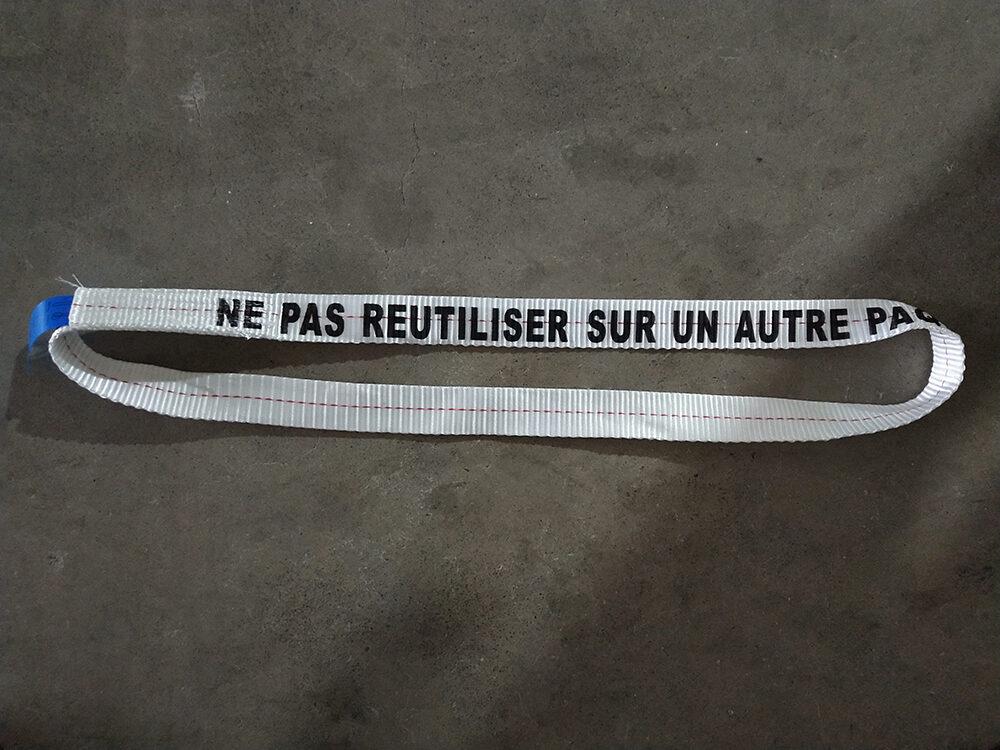
Ro-Ro Vessel Car Lashing Case Study | Securing Busses and Cars for Sea
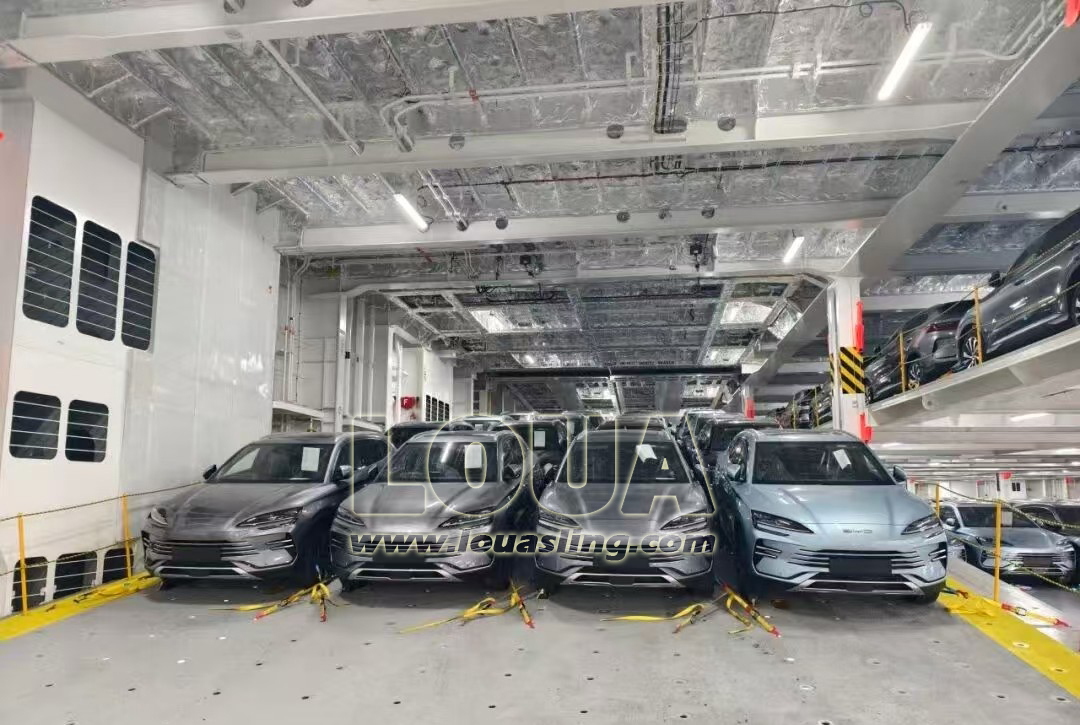
Managing cargo on a Roll-on/Roll-off (Ro-Ro) vessel is a race against time, balanced with a non-negotiable need for safety. A single loosened strap on a heavy vehicle can lead to a domino effect of catastrophic damage during a storm.
In this case study, we examine a complex loading operation that required custom solutions for two vastly different vehicle types: heavy electric passenger busses and premium, protected passenger cars.
Part 1: The Challenge of Heavy, High-Profile Vehicles (Busses)
Lifting and securing a bus is a challenge of both mass and geometry. Unlike standard cars, busses have a much higher center of gravity and immense weight, making them far more susceptible to rolling forces at sea.
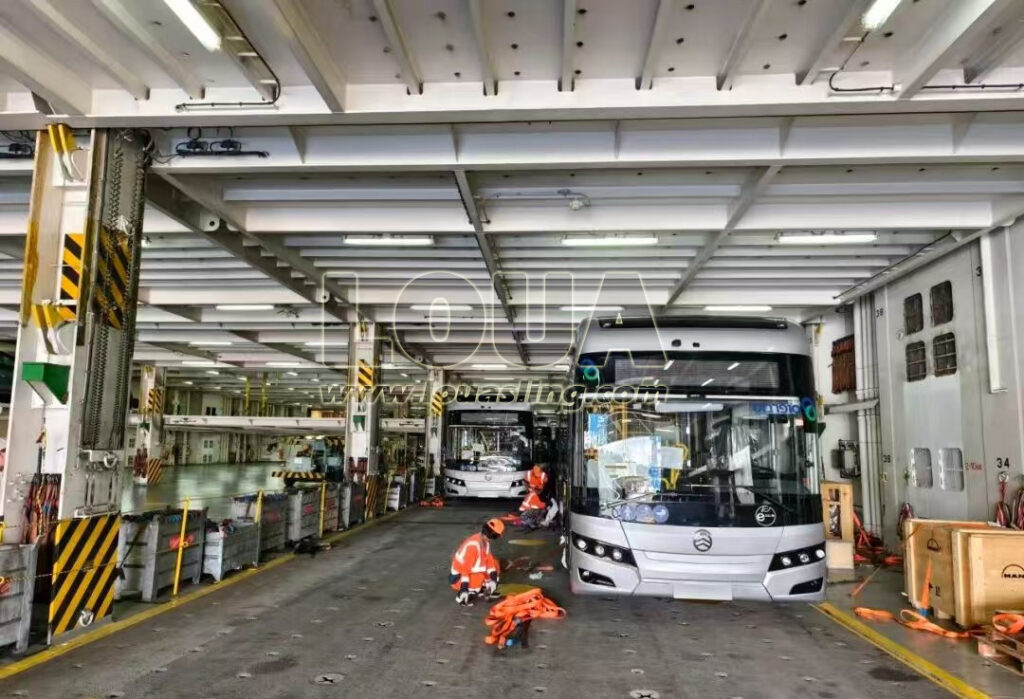
The primary challenges were:
High Tonnage: Standard tie-downs lacked the breaking strength to secure the multiple-ton busses.
Specific Hook Points: The bus frames require precise, engineered tie-down points that don’t damage the steering or battery systems.
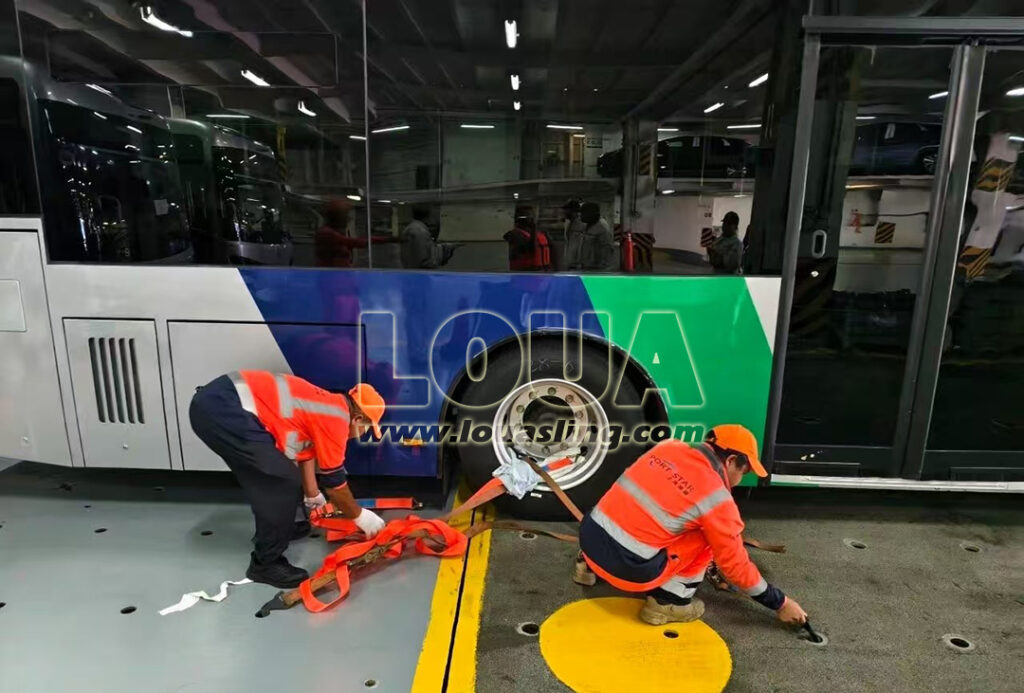
The Implementation: Part 1
As shown in Image 2, our solution involved heavy-duty ratchet tensioners paired with customized wheel-harness webbing. Instead of a single strap through a wheel, a 3-point wheel harness was used on all axles to ensure the bus was locked from lateral movement. Our operators utilize a specific choker hitch technique (Image 2), which increases tension directly on the tire and frame while keeping metal components away from the polished rims. The straps are tensioned using an ergonomic ratchet handle, allowing the operator to reach maximum safety pre-tension without excessive physical fatigue.
Part 2: The Challenge of Mass-Batch Passenger Car Securing
The challenge shifts from sheer weight to surface preservation and efficiency when securing a deck filled with passenger vehicles.
The primary challenges were:
Efficiency: Securing hundreds of vehicles per hour to meet the vessel’s sailing schedule.
Surface Preservation: Passenger cars must arrive in factory-fresh condition, without a single scratch on the paint or the wheel rims.
Low Stretch: In heavy gales, any stretch in the webbing will allow the cars to bump into each other.
The Implementation: Part 2
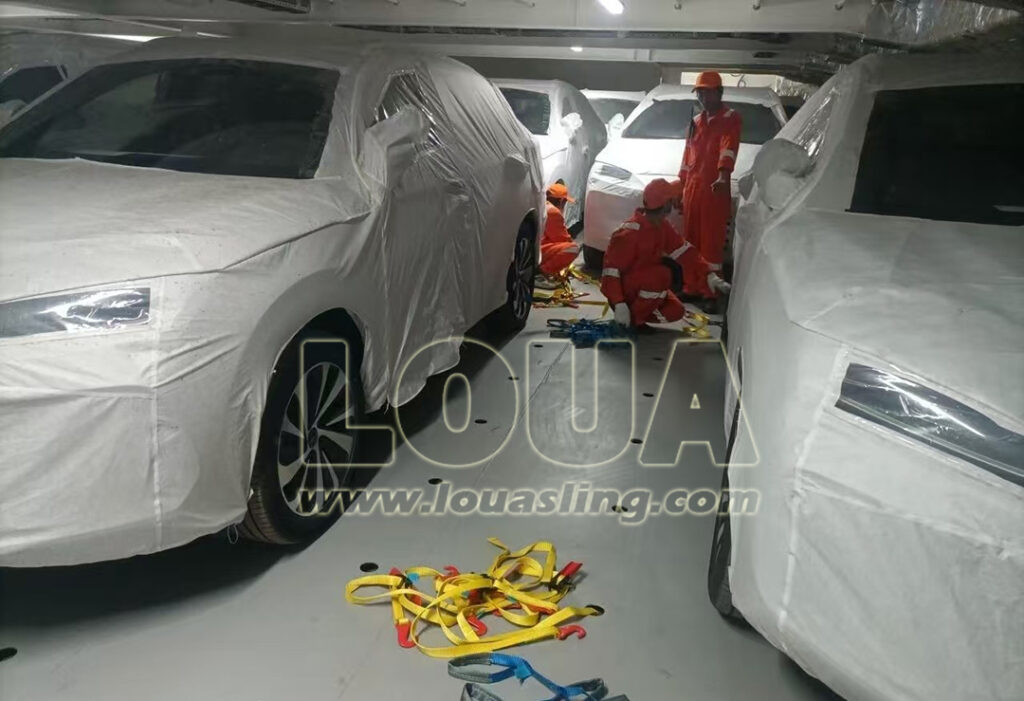
Image 3 shows cars fully wrapped in protective transit covers. This is a critical environment where standard rough webbing would ruin the paint. We supplied super-soft yet high-strength polyester webbing for these operations. Our straps use color-coded yellow (Image 4) or blue webbing to quickly identify the breaking strength, allowing stevedores to immediately choose the right equipment.
A 4-point wheel-lashing system was applied to every vehicle (Image 4). This technique requires a specialized low-profile hook designed to fit the narrow cloverleaf sockets in the Ro-Ro deck (the circular holes seen in Image 3 and 4). Our hooks feature a specific angle that allows the strap to lie flat against the tire, applying pressure directly downwards without causing rim deflection.
Conclusion: Zero Defects and Faster Turnarounds
The success of this operation was achieved through a combination of application-specific hardware and a commitment to low-stretch, high-tenacity polyester webbing.
The Result: The entire cargo, including heavy busses and delicate protected cars, arrived at the destination port with zero defects.
Operational Value: The ease of use of our lashing systems allowed the terminal operator to beat their loading quota by 10%, directly translating to lower port dues for the ship owner.
This case proves that in maritime logistics, choosing the right lashing equipment is not an expense—it is the best form of insurance. Contact us to learn more cases.